Keeping Your Dog Cool in Summer: 10 Tips
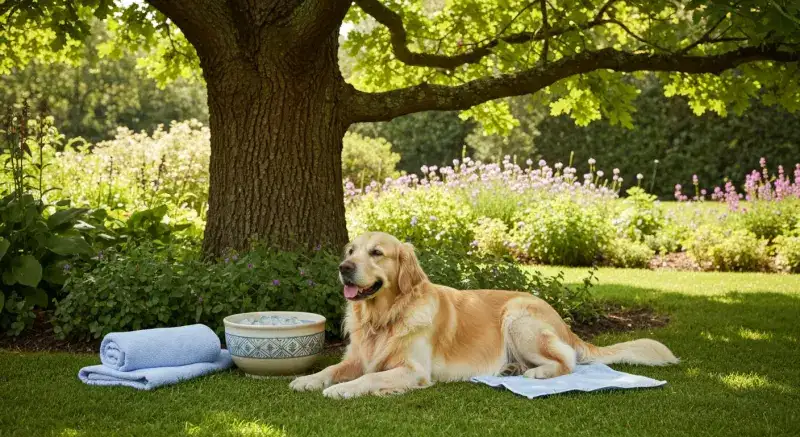
With UK summers becoming more extreme, protecting your dog from the heat is no longer optional. The Met Office reports that heatwave episodes have become markedly more frequent since 2000. Here are 10 veterinary tips for a calm, safe summer with your dog.
1. Time your walks well
Walk your dog before 9am and after 7pm, when temperatures are kinder. Avoid intense exercise between 11am and 5pm. The pavement test: place the back of your hand on the tarmac for 5 seconds. If it is too hot for you, your dog's pads could burn. At 35 degrees air temperature, tarmac can reach 65 degrees.
2. Constant hydration
A 20 kg dog should drink at least 1 litre of water a day, more in strong heat (up to 2 litres). Change the water 2-3 times a day to keep it fresh. Always carry a collapsible bottle on walks. Pet water fountains are a good investment to guarantee constant access to clean water.
3. Offer a cool surface
Dogs instinctively seek out cold surfaces: tiles, shaded earth, stone slabs. A gel cooling mat recreates that coolness anywhere, with no electricity. Place it in your dog's favourite spot so they can cool down whenever they like. The 5 to 8 degree effect is immediate and lasts 2 to 4 hours.
4. Never leave your dog in the car
This is the number-one cause of fatal heatstroke in dogs. Even with the windows cracked, the temperature in a parked car rises by 10 degrees in 10 minutes. A car parked at 25 degrees reaches 45 in 30 minutes. If you see a dog shut in a hot car, call 999.
5. Set up shaded areas
If your dog has access to a garden or patio, make sure there are shaded areas at every hour of the day. A parasol, an awning or a tree will do. Shade cuts the felt temperature by 10-15 degrees. Avoid plastic or metal kennels, which turn into ovens in the heat.
6. Watch the at-risk breeds
Brachycephalic breeds (Bulldog, Pug, Boxer) are six times more likely to suffer heatstroke, according to the Kennel Club UK (2022). Their short muzzle limits panting, the dog's only cooling mechanism. Dense-coated dogs (Husky, Samoyed), overweight or elderly dogs are also vulnerable.
7. Cool from the belly and paws
The pads and belly are where the skin is thinnest and blood flow most superficial. Wetting these areas with tepid water (not ice-cold) is the fastest way to bring body temperature down. A cooling mat works precisely on these contact points.
8. Adjust their food
Serve smaller, more frequent portions in summer. Digestion produces heat — a large meal in strong heat overloads the body. Frozen treats (frozen chicken stock, seedless watermelon chunks) are excellent cooling options that most dogs enjoy.
9. Protect the paw pads
Pad burns are common in summer. Favour grassy or earthy surfaces for walks. If a burn occurs, rinse with cold water, apply petroleum jelly and seek advice if the skin blisters. Protective boots are available for town dogs that have to walk on tarmac.
10. Know the warning signs
Heavy panting, red or purplish gums, thick drool, lethargy, staggering, vomiting — these symptoms point to imminent heatstroke. Act immediately: shade, tepid water on the body, air flow, and call your vet. Every minute counts — the mortality rate of canine heatstroke is 15%.

Prevention is the best treatment. With these 10 tips and a cooling mat sized to your dog, you can enjoy the summer with complete peace of mind.